Fleet & Hangar
Your persistent aircraft, configurations, positions and operational capabilities — ready to support the next flight.
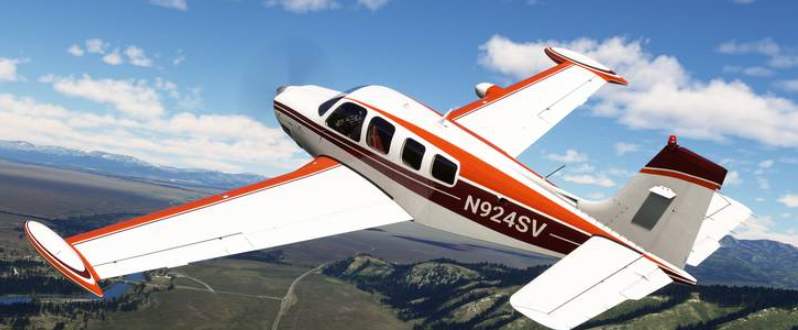
Black Square A36 Bonanza Professional
Every plottable sector recorded for this airframe. Flight Logger records use the actual stored breadcrumb where one exists; historical and other records use the known departure-to-destination sector only.
Manage declared aircraft0 declared · console / CoxBox / manual pilots
Complete route footprint
All history is shown by default. Filter the career, or click a route to inspect one sector closely.
Mapped sectors
| Date | Route | Source | Registration | Distance | Map | |
|---|---|---|---|---|---|---|
| August 22, 2026 | EGRC → EGFL | Historical Log | BOP-356 | 82.9 NM | Open → | |
| August 22, 2026 | EGIH → EGRC | Historical Log | BOP-356 | 91.8 NM | Open → | |
| August 22, 2026 | EG0E → EGIH | Historical Log | BOP-356 | 16.9 NM | Open → | |
| August 22, 2026 | EGYO → EGYO | Historical Log | BOP-356 | — | Open → | |
| August 22, 2026 | EG0E → EG0E | Historical Log | BOP-356 | 11.4 NM | Open → | |
| April 7, 2026 | EGTT → EGNE | Historical Log | N1551R | — | Open → | |
| April 7, 2026 | EGIU → EGNE | Historical Log | N1551R | 84.0 NM | Open → | |
| April 1, 2026 | EGYE → EGBE | Historical Log | Unknown | 48.0 NM | Open → | |
| April 1, 2026 | EGNE → EGYE | Historical Log | Unknown | 23.0 NM | Open → | |
| March 26, 2026 | EGEP → EGEN | Historical Log | 356 | 14.7 NM | Open → | |
| March 26, 2026 | EGEW → EGEP | Historical Log | 356 | 2.5 NM | Open → | |
| March 26, 2026 | EGES → EGEW | Historical Log | 356 | 15.9 NM | Open → | |
| March 26, 2026 | EGER → EGES | Historical Log | 356 | 8.2 NM | Open → | |
| March 26, 2026 | EGED → EGER | Historical Log | 356 | 11.6 NM | Open → | |
| March 26, 2026 | EGPA → EGED | Historical Log | 356 | 18.7 NM | Open → | |
| March 26, 2026 | EGPA → EGTT | Historical Log | 356 | — | Open → | |
| March 26, 2026 | EGZQ → EGPA | Historical Log | 356 | 25.1 NM | Open → | |
| March 26, 2026 | EGPC → EGZQ | Historical Log | 356 | 22.9 NM | Open → | |
| March 26, 2026 | EGPO → EGPC | Historical Log | 356 | 120.7 NM | Open → | |
| March 24, 2026 | EGEI → EG29 | Historical Log | 356 | 22.7 NM | Open → | |
| March 23, 2026 | EGPR → EGEI | Historical Log | 356 | 0.1 NM | Open → | |
| March 23, 2026 | EGNE → EGNE | Historical Log | 356 | 40.1 NM | Open → | |
| March 22, 2026 | EGTF → EGNE | Historical Log | N4432X | 163.6 NM | Open → | |
| March 22, 2026 | 5118N00006W → EGTF | Historical Log | N4432X | 0.2 NM | Open → | |
| March 22, 2026 | EGKN → EGTF | Historical Log | Unknown | 17.0 NM | Open → | |
| March 22, 2026 | EGHE → EGGD | Historical Log | 356 | 202.4 NM | Open → | |
| March 21, 2026 | EGXY → EGNX | Historical Log | 356 | 76.6 NM | Open → | |
| March 21, 2026 | EGNE → EGXY | Historical Log | 356 | 28.9 NM | Open → | |
| February 28, 2026 | EGSN → EG34 | Historical Log | N123AZ | 94.3 NM | Open → | |
| February 28, 2026 | EGWER → EGSN | Historical Log | N123AZ | 3.6 NM | Open → | |
| February 27, 2026 | EGEXA → EGWER | Historical Log | N123AZ | 100.7 NM | Open → | |
| February 22, 2026 | EGDI → EGEXA | Historical Log | N123AZ | 45.6 NM | Open → | |
| February 21, 2026 | 5221N00213W → EGEU | Historical Log | N123AZ | 13.6 NM | Open → | |
| February 21, 2026 | EGXJ → 5221N00213W | Historical Log | N123AZ | 73.9 NM | Open → | |
| February 21, 2026 | EGXJ → EGDJ | Historical Log | N123AZ | 12.2 NM | Open → | |
| February 21, 2026 | 5154N00207W → EGTN | Historical Log | N123AZ | 25.3 NM | Open → | |
| February 21, 2026 | EGTN → 5154N00207W | Historical Log | N123AZ | 30.1 NM | Open → | |
| February 21, 2026 | EGTN → EGTN | Historical Log | N123AZ | 0.0 NM | Open → | |
| February 21, 2026 | EGTN → EGTN | Historical Log | N123AZ | 0.0 NM | Open → | |
| February 21, 2026 | EGTN → EGTN | Historical Log | N123AZ | 0.0 NM | Open → | |
| February 21, 2026 | EGTN → EGTN | Historical Log | N123AZ | 17.5 NM | Open → | |
| February 21, 2026 | 3903N07646W → W00 | Historical Log | N123AZ | 9.2 NM | Open → | |
| February 20, 2026 | KBLM → 3903N07646W | Historical Log | N123AZ | 144.3 NM | Open → | |
| February 20, 2026 | 5129N00009W → 5129N00009W | Historical Log | N123AZ | 0.1 NM | Open → | |
| February 20, 2026 | 5129N00009W → 5129N00009W | Historical Log | N123AZ | 45.8 NM | Open → | |
| February 20, 2026 | 5127N00017W → 5129N00009W | Historical Log | N123AZ | 6.8 NM | Open → | |
| February 20, 2026 | 5127N00016W → 5127N00017W | Historical Log | N123AZ | 0.5 NM | Open → | |
| February 20, 2026 | EGVO → 5127N00016W | Historical Log | N123AZ | 29.6 NM | Open → | |
| February 19, 2026 | 56PA → KBLM | Historical Log | N123AZ | 54.8 NM | Open → | |
| February 15, 2026 | LEVY7 → LEIB | Historical Log | N123AZ | 15.8 NM | Open → | |
| February 15, 2026 | 3832N00217E → 3847N00154E | Historical Log | N123AZ | 30.2 NM | Open → | |
| February 15, 2026 | EGHP → 3831N00221E | Historical Log | N123AZ | 775.9 NM | Open → | |
| February 15, 2026 | EGHP → EGHP | Historical Log | N123AZ | 0.0 NM | Open → | |
| February 15, 2026 | EGHP → EGHP | Historical Log | N123AZ | 0.0 NM | Open → | |
| February 15, 2026 | EGHP → EGHP | Historical Log | N123AZ | 0.0 NM | Open → | |
| February 15, 2026 | EGHP → EGHP | Historical Log | N123AZ | 0.0 NM | Open → | |
| February 15, 2026 | EGHP → EGHP | Historical Log | N123AZ | 0.0 NM | Open → | |
| February 15, 2026 | EGHP → EGHP | Historical Log | N123AZ | 0.0 NM | Open → | |
| February 15, 2026 | 5113N00120W → EGHP | Historical Log | N123AZ | 3.6 NM | Open → | |
| February 15, 2026 | KBID → 56PA | Historical Log | N123AZ | 186.7 NM | Open → | |
| February 15, 2026 | KBID → KBID | Historical Log | N123AZ | 0.5 NM | Open → | |
| February 15, 2026 | KBID → 56PA | Historical Log | N123AZ | 187.4 NM | Open → | |
| February 14, 2026 | 1B2 → KBID | Historical Log | N123AZ | 52.5 NM | Open → | |
| February 14, 2026 | 1B2 → 1B2 | Historical Log | N123AZ | 0.1 NM | Open → | |
| January 24, 2026 | KOQU → 1B2 | Historical Log | N9532N | 54.7 NM | Open → |
Developer aircraft data
Black Square A36 Bonanza Professional N924SV
Black Square Bonanza Professional A36 (Normally Aspirated) Structured Procedures · Structured · Exact aircraft match
Reference view of the developer-sourced Knowledge Pack. It shows the whole library without contextual filtering. Check marks are local to this browser and do not change the live Flight Companion state.
Preparation · 2
The Black Square tablet or simulator payload interface can be used to configure the aircraft; the tablet provides real-time weight-and-balance feedback.
- Set fuel and payload for the planned simulator flight.
- Verify gross weight remains within the selected Bonanza variant limit.
- Confirm the centre-of-gravity indication remains within limits.
- Apply the selected variant's fuel-quantity limitations before takeoff.
Black Square models cold-start engine damage and recommends preheating below freezing, with preheating considered mandatory below 10°F / -12°C.
- If ambient temperature is below freezing, consider deploying the Black Square engine preheater before start.
- Treat preheating as mandatory in the simulation below approximately -12°C / 10°F.
- Allow adequate preheat time before attempting the normal start.
Startup · 9
Complete the common physical/cockpit setup before the selected variant’s engine and electrical checks.
- Confirm preflight inspection complete and control locks removed/stowed clear of the controls.
- Secure seats and seatbelts; latch the cabin doors and set the parking brake.
- Verify the emergency gear handle is stowed, landing gear DOWN and flaps UP.
- Check oxygen pressure, set avionics OFF, centre aileron trim and set alternate static air NORMAL.
- Confirm required breakers are IN, test the CO detector and select the fullest fuel tank.
- Switch the beacon ON.
Set the common A36/A36TC piston-engine controls before electrical power and fuel-system checks.
- Set throttle CLOSED, propeller HIGH RPM and mixture FULL RICH.
- Open the cowl flaps and set alternate air OFF.
- Set the firewall air valve OPEN and loadmeter to PRIMARY.
After the variant-specific engine-control setup, energise the common electrical system and verify basic indications.
- Switch BATTERY MASTER ON.
- Verify at least 23 V on the bus.
- Test the annunciators and consider any indication that does not behave as expected.
Complete the A36/A36TC electrical-generation and auxiliary-pump checks after battery/annunciator power-up.
- Switch the primary alternator ON and standby alternator ON.
- Check fuel quantities.
- Run the auxiliary fuel pump on LO, confirm it is audible, then switch it OFF.
Both Bonanza Professional checklist branches prove the standby gyro/instrument-air system before engine start.
- Switch the standby gyro pump ON.
- Verify the STBY GYRO annunciation and instrument-air indication in the green.
- Switch the standby gyro pump OFF.
Use Black Square's short priming sequence for a cold reciprocating Bonanza engine.
- Set mixture FULL RICH, propeller HIGH RPM and throttle FULL OPEN.
- Run the auxiliary fuel pump on HI for about 2-3 seconds and verify fuel flow above 3 GPH.
- Switch the auxiliary fuel pump OFF.
- Set the throttle about 1/2 inch open.
- Engage the starter and stabilise the engine around 1,000-1,200 RPM after it fires.
A recently stopped fuel-injected engine may develop vapor lock; Black Square uses a fuel-circulation step before normal priming.
- Set mixture CUT-OFF and propeller HIGH RPM.
- Run the auxiliary fuel pump on HI for about 10-20 seconds, then switch it OFF.
- Set mixture FULL RICH and throttle FULL OPEN.
- Run the auxiliary fuel pump on HI for about 2-3 seconds and verify fuel flow above 3 GPH, then switch it OFF.
- Set the throttle about 1/2 inch open and engage the starter.
- If the engine does not start, repeat the documented hot-start flow rather than prolonged cranking.
If excessive priming has created an over-rich condition, use Black Square's flooded-start flow.
- Set mixture LEAN and propeller HIGH RPM.
- Set the throttle about 1/2 inch open.
- Engage the starter and advance the throttle until the engine starts.
- Return the throttle to IDLE and mixture FULL RICH after the engine fires.
Confirm oil/electrical indications and lean for ground operation before the shared after-start flow.
- Set 1,000-1,200 RPM and verify oil pressure in the green.
- Confirm START and LOW VOLTS annunciations extinguish.
- Within two minutes, verify alternator load below 25 A and bus voltage about 28 V.
- Check engine instruments.
- Lean the mixture for taxi to reduce spark-plug fouling.
- Set lights as required and keep weather radar OFF or in STANDBY.
- Switch avionics ON.
- Set cabin air/heat and air conditioning as desired.
- Release the parking brake when ready to taxi and check the brakes.
Taxi / Run-up · 4
Perform the common A36/A36TC propeller, magneto and instrument-air run-up.
- Set the parking brake, test/consider annunciators and confirm the remote compass is slaved/aligned.
- Set mixture FULL RICH and throttle to 1,700 RPM.
- Exercise the propeller and verify approximately a 300 RPM drop.
- Check magnetos with no more than 150 RPM drop.
- Verify instrument air remains in the green.
Transfer load to the standby alternator and back, then prove the propeller-heat circuit.
- Switch the PRIMARY alternator OFF and select the SECONDARY loadmeter.
- Verify alternator load increases and the STBY ALT annunciator illuminates.
- Switch the standby alternator OFF and verify alternator load falls to zero.
- Select PRIMARY loadmeter, switch PRIMARY alternator ON and STANDBY alternator ON, and verify alternator load above 25 A.
- Switch propeller heat ON and verify approximately 20-25 A, then switch propeller heat OFF.
- Return throttle to 1,000-1,200 RPM.
Black Square's run-up includes a directional autopilot/flight-director response test.
- Exercise electric trim.
- Set the heading bug about 30° left, engage the autopilot master and HDG mode, and observe the yoke/flight-director command left.
- Move the heading bug about 30° right and observe the corresponding right command.
- Press autopilot disconnect once to confirm AP OFF, then again to confirm flight director OFF.
- Set elevator trim for takeoff.
Complete the final airframe and flight-instrument checks before the Before Takeoff flow.
- Confirm the ICE DEFLEC annunciation during the check and then set the ice deflector as required.
- Check flap operation and set takeoff flaps.
- Close the cockpit window and confirm the AFT DOOR annunciator is extinguished.
- Check flight controls FREE and CORRECT.
- Set altimeter, departure altitude and takeoff heading.
- Dim panel lights as appropriate for takeoff and release the parking brake when ready.
Takeoff · 2
Set the piston-engine controls and minimum oil temperature before applying variant-specific takeoff power.
- Set mixture for MAX POWER.
- Verify oil temperature is at least 24°C.
- Confirm the auxiliary fuel pump is OFF.
- Switch air conditioning OFF.
- Switch the landing light ON.
- Set the transponder to ALT mode.
- Set weather radar ON as required.
The A36 takeoff checklist uses full throttle; available manifold pressure naturally falls with altitude.
- Advance the throttle smoothly to FULL OPEN.
- Monitor manifold pressure, RPM, fuel flow and other engine instruments during the takeoff roll.
- Release the brakes and verify engine instruments remain within limits as power is applied.
- Retract the landing gear once no usable runway remains.
- Retract the flaps at 80 KIAS.
- Engage the autopilot only when desired and appropriate after the initial departure.
Climb · 4
Use Black Square's common initial climb configuration for the A36/A36TC.
- Set mixture for MAX POWER.
- Set propeller to 2,700 RPM.
- Use full throttle, observing the selected variant's manifold-pressure limitations.
- Set cowl flaps as required.
Reduce propeller RPM for the normal enroute climb while retaining the appropriate mixture/throttle strategy.
- Set mixture for MAX POWER.
- Set propeller to 2,500 RPM.
- Use full throttle, observing the selected variant's engine limitations.
- Set cowl flaps as required.
Black Square provides an A36-specific cruise-climb table and speed schedule.
- Use approximately 110 KIAS to 16,000 ft.
- Use approximately 100 KIAS to 18,500 ft.
- Use approximately 90 KIAS only where the published table/weight applicability supports the higher-altitude climb.
- Expect manifold pressure and available power to decrease with altitude in the normally aspirated variant.
After the variant-specific power configuration, manage cabin systems and continue engine monitoring.
- Use oxygen as required for altitude.
- Set air conditioning and cabin air/heat as desired, subject to the selected variant's engine-temperature limitations.
- Continue monitoring engine performance throughout the climb.
Cruise · 3
Use the common A36/A36TC cruise control positions, then refine power/mixture using the selected variant's performance guidance.
- Close the cowl flaps and switch the landing light OFF.
- Transfer tip-tank fuel as required when tip tanks are installed.
- Lean the mixture LOP or ROP as desired/appropriate.
- Set propeller around 2,500 RPM and use the selected variant's manifold-pressure/power guidance.
- Keep left/right fuel imbalance within 15 gallons.
- Use propeller heat as required by conditions.
- Set cabin air/heat and air conditioning as desired.
- Continue monitoring engine performance.
Black Square publishes altitude-dependent 75%, 65% and 55% cruise tables for the A36.
- Select the desired cruise power using the A36 manifold-pressure/RPM tables.
- Recognise that wide-open-throttle regions vary with altitude as available manifold pressure falls.
- Use the inherited reciprocating mixture-management procedure to set LOP/ROP as desired.
The Black Square Bonanza Professional cruise and approach checklists call for pitot heat when OAT is below 4°C.
- Verify pitot heat is ON while operating in the published cold-OAT condition.
- Continue to use the rest of the aircraft's ice-protection equipment as conditions require.
Descent · 2
Reduce power while managing mixture and cylinder cooling.
- Keep cowl flaps CLOSED unless another condition requires otherwise.
- Reduce throttle for the planned descent.
- Enrichen the mixture progressively.
- Monitor engine performance and avoid excessive cylinder cooling; the checklist references 116°C as the minimum CHT target.
Add the fuel-transfer, cowl-flap and mixture actions that are not part of the all-variant family card.
- Secure seats and seatbelts.
- Select the fullest fuel tank.
- Switch oxygen OFF when no longer required.
- Switch the landing light ON as appropriate.
- Set pitot heat ON if OAT is below 4°C.
- Switch propeller heat OFF when leaving icing conditions or when appropriate for the approach, while retaining any protection still required.
- Switch air conditioning OFF.
- Keep fuel imbalance within 15 gallons.
- Transfer tip-tank fuel as required if fitted.
- Set cowl flaps as required.
- Set mixture for MAX POWER before landing.
Approach · 1
Confirm the early preparation and select approach flaps when within the published flap operating limit.
- Verify the Descent/pre-approach actions are complete.
- Reconfirm pitot heat if OAT is below 4°C and other ice protection as conditions require.
- Select APPROACH flaps when within the applicable flap operating limit.
- Prepare for the separate Landing checklist before touchdown.
Landing · 1
Complete the piston-engine part of the Landing checklist.
- Set mixture for MAX POWER.
- Set propeller HIGH RPM.
- Set flaps as required.
- Confirm landing gear DOWN and LOCKED.
- Press autopilot disconnect once to ensure the autopilot is disengaged.
After Landing · 1
Return the piston engine cooling system to ground configuration after clearing the runway.
- Open the cowl flaps.
- Raise the flaps.
- Set exterior lights as required.
- Switch pitot heat OFF.
- Set air conditioning and cabin air/heat as desired.
Parking · 1
Create a deliberate handoff from taxi-in to the variant-specific shutdown sequence.
- Bring the aircraft to a complete stop in the intended parking position.
- Set the parking brake.
- Allow engine indications to stabilise at idle before beginning shutdown.
Shutdown · 2
Use the common A36/A36TC shutdown order between the family prepare/secure cards.
- Set the parking brake.
- Switch avionics OFF.
- Switch all subpanel switches OFF.
- Close the throttle.
- Set propeller HIGH RPM.
- Move mixture to CUT-OFF.
- Switch magnetos OFF.
- Switch alternators OFF.
- Switch BATTERY MASTER OFF.
Complete the shared securing actions after the variant-specific engine/electrical shutdown.
- Release the parking brake if appropriate for the secured/chocked simulator state.
- Install the control locks.
Manual procedure library
Fire & Smoke · 4
Reciprocating Bonanza ground-engine-fire shutdown sequence.
- Move the fuel selector to OFF.
- Move mixture to IDLE CUT-OFF.
- Switch alternators OFF, then battery master OFF.
- Switch magnetos OFF.
Reciprocating Bonanza in-flight engine-fire isolation sequence.
- Pull the firewall air valve CLOSED.
- Move the fuel selector OFF and mixture to IDLE CUT-OFF.
- Switch alternators OFF and battery master OFF.
- Switch magnetos OFF.
- Do not attempt an engine restart.
Reciprocating Bonanza electrical-fire isolation and cautious power-restoration flow.
- Pull the firewall air valve CLOSED.
- Switch alternators OFF and battery master OFF.
- Open the windows.
- Switch avionics, air conditioning, other electrical equipment, cabin heat/air and the avionics relay OFF.
- If the fire indication clears, restore battery master and essential circuits one at a time.
- Restore avionics power only as needed, circuit by circuit.
Reciprocating Bonanza response to a persistent carbon-monoxide indication.
- Pull the firewall air valve CLOSED and close cabin air/heat.
- Reset the CO detector.
- If the CO alarm persists, close the throttle, move mixture to IDLE CUT-OFF, set propeller LOW RPM and switch magnetos OFF.
- Open the windows, select cabin air FULL OPEN and switch nonessential equipment OFF.
Engine & Power · 4
Reciprocating Bonanza rejected-takeoff engine-failure flow.
- Close the throttle.
- Apply maximum braking as required.
- Move the fuel selector OFF.
- Switch alternators OFF and battery master OFF.
Reciprocating Bonanza restart flow followed by forced-landing preparation if power cannot be restored.
- Establish approximately 110 KIAS.
- Select the opposite fuel tank.
- Confirm magnetos are on BOTH and set the auxiliary fuel pump to HI.
- Move mixture rich, then adjust lean as required while attempting recovery.
- Engage the starter.
- If the engine does not restart, switch the auxiliary fuel pump OFF, set mixture FULL RICH, recheck BOTH magnetos, select alternate air ON and try the starter again.
- If power is still not restored, select a favourable landing site.
Reciprocating Bonanza troubleshooting sequence for rough engine operation.
- Set the auxiliary fuel pump to LO.
- Move mixture rich, then adjust lean while observing the engine response.
- Confirm magnetos are on BOTH.
- Select alternate air ON.
Reciprocating Bonanza maximum-glide configuration.
- Keep landing gear UP and flaps UP.
- Close the cowl flaps.
- Set propeller to LOW RPM.
- Target approximately 110 KIAS.
- Switch air conditioning OFF and nonessential electrical equipment OFF.
Electrical · 2
Reciprocating Bonanza response to a starter that remains engaged.
- Switch alternators OFF.
- Switch battery master OFF.
- Move mixture to IDLE CUT-OFF.
- Switch magnetos OFF.
Reciprocating Bonanza primary/standby alternator recovery flow.
- Select the primary loadmeter and verify the primary alternator is not carrying load.
- Attempt a primary-alternator reset.
- If it remains offline, select the secondary loadmeter and switch the standby alternator ON.
- Confirm the STBY ALT annunciator and standby-alternator load.
- If required, check/reset the standby-alternator breakers and system.
- If bus voltage remains below 23 V or LOW VOLTS remains illuminated, switch nonessential equipment OFF.
- Plan to land as soon as practical.
Icing & Air · 2
Common Bonanza Professional recovery flow for loss of normal instrument air.
- If the GYRO warning is illuminated, switch the standby gyro pump ON.
- If the standby-gyro annunciator does not appear, reset the standby-gyro circuit breaker.
- Confirm the standby-gyro annunciator is illuminated and instrument-air indication returns to the green range.
Reciprocating Bonanza severe-icing configuration.
- Switch all available ice-protection equipment ON.
- Monitor ice accumulation.
- Set propeller HIGH RPM and close the cowl flaps.
- Set cabin heat and defroster to maximum.
- Select alternate static air ON.
Navigation & Autopilot · 2
Common Bonanza Professional remote-compass recovery procedure.
- Pull and reset the gyro-slave circuit breaker.
- If the remote compass remains misaligned, select FREE mode.
- Slew the compass indication to the current magnetic heading.
Common Bonanza Professional response to an autopilot malfunction or trim runaway.
- Disconnect the autopilot immediately.
- Pull the autopilot circuit breakers OFF.
Airframe & Gear · 5
Common Bonanza Professional response to an air-conditioning door warning in flight.
- Discontinue air-conditioning use.
- Expect additional aerodynamic drag.
Common Bonanza Professional cabin-door warning procedure.
- Check the cabin-door handle and latch condition.
- Reduce airspeed.
- Expect increased drag and plan to land.
Common Bonanza Professional manual landing-gear extension procedure.
- Reduce to 154 KIAS or less.
- Pull the landing-gear motor circuit breaker OFF.
- Place the landing-gear handle DOWN.
- Engage the emergency gear handle.
- Turn the manual crank approximately 50 turns.
- Push the gear-warning circuit breaker ON and confirm three green gear indications.
- Stow the emergency gear handle.
Common Bonanza Professional restoration flow after a manual gear extension.
- Confirm the emergency gear handle is stowed.
- Push the landing-gear motor circuit breaker ON.
- Place the landing-gear handle UP.
Common Bonanza Professional flap-failure checks.
- Check that the flap circuit breakers are ON.
- Verify bus voltage is at least 23 V.
- Command flaps as required and check the flap indicators.
- Visually confirm the actual flap position.
Landing · 3
Reciprocating Bonanza emergency-descent configuration.
- Close the throttle.
- Set propeller HIGH RPM.
- Extend the landing gear.
- Select approach flaps.
- Target approximately 154 KIAS.
Reciprocating Bonanza go-around configuration.
- Set mixture for maximum power.
- Set propeller to 2,700 RPM and open the throttle fully.
- Open the cowl flaps and check engine instruments.
- Retract landing gear when no usable runway remains.
- Retract flaps at approximately 80 KIAS.
Reciprocating Bonanza final configuration for a no-power landing.
- Move the fuel selector OFF.
- Move mixture to IDLE CUT-OFF and switch magnetos OFF.
- Set flaps as required.
- Confirm landing gear DOWN and LOCKED.
- Switch alternators OFF and battery master OFF.