Fleet & Hangar
Your persistent aircraft, configurations, positions and operational capabilities — ready to support the next flight.
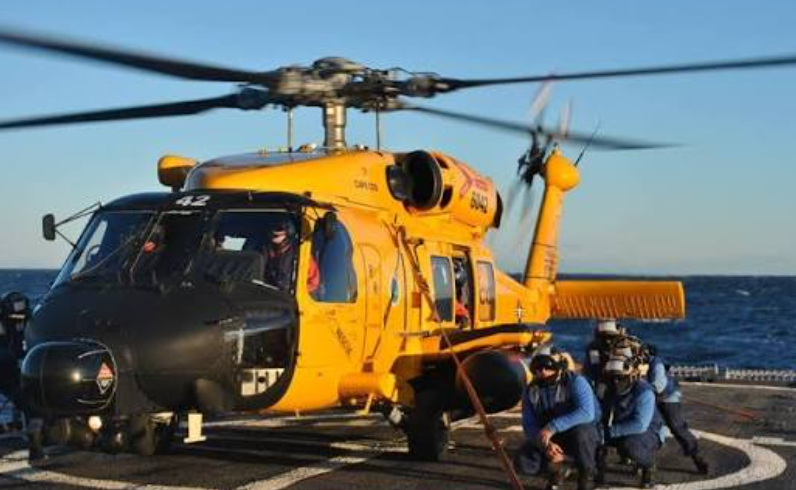
MH60 Tango
Every plottable sector recorded for this airframe. Flight Logger records use the actual stored breadcrumb where one exists; historical and other records use the known departure-to-destination sector only.
Manage declared aircraft0 declared · console / CoxBox / manual pilots
Complete route footprint
All history is shown by default. Filter the career, or click a route to inspect one sector closely.
Mapped sectors
| Date | Route | Source | Registration | Distance | Map | |
|---|---|---|---|---|---|---|
| September 23, 2026 | 70WA → 0WA7 | Flight Logger Recorded track | 6042 | 59.4 NM | Open → | |
| August 18, 2026 | KSAC → KSCK | Historical Log | BOP-356 | — | Open → | |
| August 18, 2026 | KSAC → KSMF | Historical Log | BOP-356 | — | Open → | |
| August 17, 2026 | MDPP → MDPP | Historical Log | BOP-356 | — | Open → | |
| August 17, 2026 | TUPW → MDPP | Historical Log | BOP-356 | — | Open → | |
| March 25, 2026 | EG6YA → 5710N00521W | Historical Log | 356 | 29.8 NM | Open → | |
| March 7, 2026 | PAKD → 4K5 | Historical Log | Unknown | 8.0 NM | Open → | |
| March 5, 2026 | PAKD → PAKD | Historical Log | Unknown | — | Open → | |
| March 1, 2026 | PADQ → PADQ | Historical Log | N123AZ | — | Open → | |
| February 28, 2026 | 5731N15248W → PAKD | Historical Log | N123AZ | 22.1 NM | Open → | |
| February 28, 2026 | 5730N15236W → 5731N15248W | Historical Log | N123AZ | 11.9 NM | Open → | |
| February 28, 2026 | 5733N15232W → 5730N15236W | Historical Log | N123AZ | 5.3 NM | Open → | |
| February 28, 2026 | 5735N15249W → 5733N15232W | Historical Log | N123AZ | 38.4 NM | Open → | |
| February 28, 2026 | 5735N15249W → 5735N15249W | Historical Log | N123AZ | 0.0 NM | Open → | |
| February 28, 2026 | PAKD → 5735N15249W | Historical Log | N123AZ | 19.9 NM | Open → | |
| February 28, 2026 | PAKD → PAKD | Historical Log | N123AZ | 0.0 NM | Open → | |
| February 28, 2026 | PAKD → PADQ | Historical Log | N123AZ | — | Open → | |
| February 28, 2026 | 5739N15220W → PAKD | Historical Log | N123AZ | 0.1 NM | Open → | |
| February 28, 2026 | PAKD → 5739N15220W | Historical Log | N123AZ | 11.4 NM | Open → | |
| February 28, 2026 | PAKD → PADQ | Historical Log | N123AZ | — | Open → | |
| February 28, 2026 | PAKD → PAKD | Historical Log | Unknown | — | Open → | |
| February 28, 2026 | EGHH → 5756N15236W | Historical Log | N123AZ | 16.9 NM | Open → | |
| February 28, 2026 | PADQ → PADQ | Historical Log | N123AZ | — | Open → | |
| February 28, 2026 | 5327N00150W → 5327N00150W | Historical Log | N123AZ | 0.3 NM | Open → | |
| February 28, 2026 | EGCN → 5327N00151W | Historical Log | N123AZ | 50.1 NM | Open → |
MH60 Tango
RFoV has recorded 32 sectors in this aircraft across 30 airports. Its story currently continues from 0WA7. Charter work has become a visible part of this aircraft story.
Possible next chapters
RFoV uses this airframe’s recorded history plus the current suitable opportunity set to suggest where its story could go next.
Developer aircraft data
MH60 Tango
Miltech Simulations MH60 Tango — Structured Rotorcraft Knowledge · Structured · Exact aircraft match
Reference view of the developer-sourced Knowledge Pack. It shows the whole library without contextual filtering. Check marks are local to this browser and do not change the live Flight Companion state.
Preparation · 2
Confirm the simulator controls needed by the developer aircraft are mapped before beginning a cold start.
- Verify cyclic pitch/roll, collective and anti-torque pedal axes respond correctly.
- Ensure the helicopter-throttle axis is not being used; the simulated governor manages rotor/engine speed.
- Confirm the rotor-brake command is mapped and behaves as expected.
- Review any mission-system keybinds needed for the planned flight.
Set the aircraft for a powered cold-start sequence and remove external items that would block operation.
- Secure the aircraft on the ground with chocks/parking brake as appropriate and lock the tail wheel.
- Confirm engine/APU fire controls are in their normal pre-start positions and perform the simulated fire-detection test.
- Remove exhaust/pitot covers and other configured ground items before start.
- Load mission equipment or flight-plan data required for the sortie before engine start.
Startup · 2
Bring the electrical/APU and flight-computer systems online before engine start.
- Switch battery power on, configure lighting as required and set the ECS/air-source system for APU operation.
- Enable fuel boost/prime functions required for APU start, start the APU and bring its generator online.
- Power the primary/backup computers, mission/flight displays and both EGI systems, allowing alignment to progress.
- Set/uncage barometric and standby instruments, review the systems page, acknowledge cautions and verify fuel indications.
- Set radio/navigation/transponder and radar-altimeter references for the planned flight.
Start engine 1 and engine 2 in sequence, then transition the rotorcraft from APU-supported start to normal engine-powered operation.
- Confirm the area and doors are secure; verify SAS 1, SAS 2, TRIM and stabilator automatic control are enabled.
- Set ignition/fuel controls for start and start engine 1 only after the indicated turbine temperature is suitably low.
- Move engine 1 PCL to idle and confirm the displayed engine values are within the simulated limits, then repeat for engine 2.
- Check oil pressure and engine-speed agreement, release the rotor brake and move both PCLs to the flight position.
- Verify rotor/engine percentage and torque balance, select the normal fuel-feed positions and switch both main generators on.
- Transfer the ECS to engine supply, remove the APU generator and shut the APU down; configure de-ice as conditions require.
Taxi / Run-up · 1
Remove ground restraints and establish the ground-handling configuration before moving.
- Remove chocks, set exterior lighting as required and release the parking brake.
- Release/unlock the tail wheel for manoeuvring and confirm steering response.
- Keep the taxi area clear and monitor flight/engine indications during movement.
Takeoff · 1
Set flight-control augmentation, environmental/ice protection and departure configuration before lift-off.
- Set lights and anti-ice/pitot/de-ice equipment for the conditions.
- Confirm SAS 1, SAS 2 and TRIM remain on and stabilator automatic control is enabled.
- Review instruments and warning/caution/advisory indications and set the transponder.
- Lock the tail wheel for departure and establish the intended takeoff collective/configuration.
Climb · 1
Maintain the shared MH60 systems configuration and monitor aircraft state as the departure transitions into climb.
- Use lighting and ice-protection systems as required by conditions.
- Select AFCS/autopilot assistance only as appropriate to the flight segment.
- Monitor instruments and warning/caution/advisory indications.
- Track fuel consumption during the climb.
Cruise · 1
Continue system, fuel and AFCS monitoring while established en route.
- Set lighting and anti-ice/de-ice systems as required.
- Use AFCS/autopilot modes as appropriate and continue monitoring the aircraft rather than treating automation as autonomous navigation.
- Review instruments/WCA indications periodically.
- Monitor fuel consumption against the planned sortie.
Approach · 1
Reconfigure the aircraft for the intended landing area and verify the landing site is clear.
- Set lights as required and review instruments and warning/caution/advisory indications.
- Check fuel consumption/state before the terminal manoeuvre.
- Lock the tail wheel as required for the landing configuration.
- Confirm the intended landing area is clear before committing to the final landing manoeuvre.
Landing · 1
Maintain the chosen stabilisation/hover mode and land into the cleared area without treating RFoV as an aircraft-control system.
- Maintain the required cyclic/collective/pedal control or selected AFCS assistance through touchdown.
- Confirm the aircraft is stable on the surface before changing the ground-handling configuration.
After Landing · 1
Transition from flight to ground operation and prepare the APU before engine shutdown.
- Neutralise flight controls as appropriate, use brakes as required and set the tail-wheel state for ground manoeuvring.
- Set lighting as required and switch flight ice-protection equipment off when no longer needed.
- Select ECS air source to APU, enable the required APU prime/boost functions and start the APU.
- Bring the APU generator online before proceeding to shutdown.
Parking · 1
Stabilise the aircraft on the ground before engine shutdown and post-flight securing.
- Lock the tail wheel, set the transponder to standby and set the parking brake.
- Install chocks when appropriate before removing engine power.
- Confirm the aircraft is positioned safely for rotor-brake and shutdown actions.
Shutdown · 1
Use the shared S/R/T shutdown sequence to remove engine power, stop the rotor and de-energise the aircraft.
- Switch both main generators off and set engine ignition off.
- Allow both PCLs to remain at idle for the developer-specified cool-down period before moving engine/fuel controls off in sequence.
- Apply the rotor brake as required after engine shutdown and disable stabilator auto, SAS/TRIM and utility hydraulic systems.
- Configure blade/tail fold only when desired and when the simulated prerequisites are satisfied.
- Power down computers, EGI, mission/flight displays and lights.
- Remove APU generator/air source, shut down the APU/prime/boost systems and finally switch the battery off.