Fleet & Hangar
Your persistent aircraft, configurations, positions and operational capabilities — ready to support the next flight.
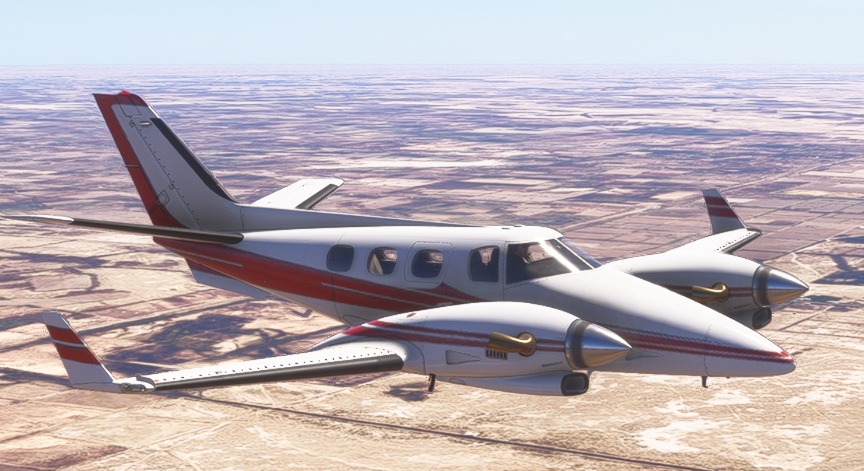
Black Square Turbine Duke
Every plottable sector recorded for this airframe. Flight Logger records use the actual stored breadcrumb where one exists; historical and other records use the known departure-to-destination sector only.
Manage declared aircraft0 declared · console / CoxBox / manual pilots
Complete route footprint
All history is shown by default. Filter the career, or click a route to inspect one sector closely.
Mapped sectors
| Date | Route | Source | Registration | Distance | Map | |
|---|---|---|---|---|---|---|
| August 30, 2026 | UTAT → UT1H | Flight Logger Recorded track | N2830B | 511.6 NM | Open → | |
| June 3, 2026 | HKRE → HKKI | Historical Log | BOP-356 | — | Open → | |
| April 16, 2026 | HKMO → HKRE | Historical Log | N5395R | — | Open → | |
| April 15, 2026 | HTZA → HKMO | Historical Log | N5395R | — | Open → | |
| April 15, 2026 | HTZA → HTZA | Historical Log | N5395R | — | Open → | |
| April 5, 2026 | FQLC → HTZA | Historical Log | N5395R | 504.4 NM | Open → | |
| April 3, 2026 | FWKI → FQLC | Historical Log | N5395R | — | Open → | |
| April 2, 2026 | FWCL → FWCL | Historical Log | N5395R | — | Open → | |
| April 2, 2026 | FWCL → FQLC | Historical Log | N5395R | 145.0 NM | Open → | |
| April 2, 2026 | FVBI → FWCL | Historical Log | N5395R | 455.0 NM | Open → | |
| March 29, 2026 | FBKE → FVBI | Historical Log | N5395R | 153.9 NM | Open → | |
| March 29, 2026 | FBKE → FYWH | Historical Log | N5395R | — | Open → | |
| March 27, 2026 | FLSS → FBKE | Historical Log | N5395R | 84.8 NM | Open → | |
| March 27, 2026 | FYKM → FLSS | Historical Log | N5395R | 20.5 NM | Open → | |
| March 27, 2026 | FYKM → FBKE | Historical Log | N5395R | 57.0 NM | Open → | |
| March 27, 2026 | FYKM → FYWH | Historical Log | N5395R | — | Open → | |
| March 27, 2026 | FBNA → FYKM | Historical Log | 356 | 157.1 NM | Open → | |
| March 26, 2026 | FBKI → FBNA | Historical Log | N5395R | 66.3 NM | Open → | |
| March 26, 2026 | FBKI → FBKI | Historical Log | N5395R | 58.7 NM | Open → | |
| March 26, 2026 | EGEN → EGPE | Historical Log | 356 | 135.5 NM | Open → | |
| March 26, 2026 | EGER → EGPE | Historical Log | 356 | — | Open → | |
| March 22, 2026 | EGNE → EGPR | Historical Log | 356 | 323.2 NM | Open → |
Developer aircraft data
Black Square Turbine Duke N2830B
Generic RFoV simulator checklist · Generic · Fallback_characteristics_only match
Reference view of the developer-sourced Knowledge Pack. It shows the whole library without contextual filtering. Check marks are local to this browser and do not change the live Flight Companion state.
Preparation · 2
Confirm the intended aircraft, route, fuel/load and simulator configuration are ready for this flight.
- Confirm aircraft/route/load setup.
- Review departure and arrival context.
- Verify the aircraft is in a safe pre-start state.
Review departure, destination, weather, temperature, time-of-day and any unusual RFoV context before starting.
- Confirm aircraft/route/load setup.
- Review departure and arrival context.
- Verify the aircraft is in a safe pre-start state.
Startup · 2
Bring the aircraft from its initial state to a stable running/ready state using the add-on’s normal controls and indications.
- Establish electrical/fuel/engine start configuration.
- Start engine(s) using the add-on normal procedure.
- Confirm stable engine/electrical indications.
Confirm the engine(s), electrical system and essential instruments show a normal simulator state before movement.
- Establish electrical/fuel/engine start configuration.
- Start engine(s) using the add-on normal procedure.
- Confirm stable engine/electrical indications.
Taxi / Run-up · 2
Before committing to taxi, confirm braking/steering response and that primary flight controls move as expected.
- Confirm brakes/steering.
- Check primary flight controls and instruments.
- Complete departure/navigation setup before runway entry.
Confirm navigation/avionics, departure runway, initial plan and takeoff configuration are ready before entering the runway.
- Confirm brakes/steering.
- Check primary flight controls and instruments.
- Complete departure/navigation setup before runway entry.
Takeoff · 2
Confirm runway, controls, configuration and engine indications are appropriate for the planned simulator departure.
- Confirm runway and takeoff configuration.
- Re-check engine/system indications.
- Confirm any unusual weather/runway context before applying takeoff power.
Re-check any weather, temperature, visibility or runway context RFoV has highlighted for this departure.
- Confirm runway and takeoff configuration.
- Re-check engine/system indications.
- Confirm any unusual weather/runway context before applying takeoff power.
Climb · 1
Transition from takeoff configuration to the normal climb state and confirm engine/instrument indications remain normal.
- Transition from takeoff to climb configuration.
- Set the planned climb power/speed.
- Monitor engine and flight instruments.
Cruise · 1
Set an appropriate cruise configuration and periodically monitor engine, fuel and flight instruments.
- Establish cruise power/configuration.
- Check fuel/engine/instruments periodically.
Descent · 1
Review arrival weather/runway context, configure navigation as needed and establish a suitable descent state.
- Review arrival weather/runway.
- Set descent/navigation configuration.
- Brief the approach/landing plan.
Approach · 1
Confirm the intended runway/approach, landing configuration plan and relevant aircraft systems before final approach.
- Confirm runway/approach.
- Set landing configuration progressively.
- Verify final approach setup.
Landing · 1
Verify the aircraft is in the intended landing configuration and the runway/landing plan remains appropriate.
- Confirm final landing configuration.
- Continue only with a stable simulator approach.
After Landing · 1
After clearing the runway, return the aircraft to a safe taxi configuration and adjust lights/systems as appropriate.
- Clear the runway.
- Return to taxi configuration.
- Reconfigure lights/systems as appropriate.
Parking · 1
Set the parking brake and place avionics, electrical and other aircraft systems into the intended parked state.
- Set parking brake.
- Secure/stow aircraft systems for shutdown.
Shutdown · 1
Shut down the engine(s) and remaining aircraft systems using the add-on’s normal shutdown sequence, then secure the aircraft.
- Stop engine(s) using the aircraft normal sequence.
- Switch avionics/electrical systems off as appropriate.
- Leave the aircraft in a secured state.